
Orthodontics & Braces in Abuja
Schedule an appointment
Data gathered across our partner network of premier dental clinics in Abuja indicates a major shift in local healthcare trends: over 40% of orthodontics and braces consultations in areas like Wuse II, Maitama, and Asokoro are now requested by adults over the age of 25. Many of these working professionals seek treatment not just for cosmetics, but because misaligned teeth cause chronic jaw discomfort, uneven tooth wear, and difficulty chewing.
When looking for a reliable dental clinic in Abuja to straighten teeth, many patients assume the process is purely aesthetic. However, crowded or crooked teeth create tight spaces that are incredibly difficult to clean, leading to plaque buildup, bad breath, and premature cavities. Correcting these structural alignment issues with specialized orthodontic care is essential for long-term oral health.
What Our Partner Dentists See in the Field
Our network of experienced Abuja dentists regularly observes the long-term impact of untreated alignment issues. On average, 6 out of 10 adult orthodontic consultations involve patients who had braces as teenagers but experienced a relapse because they stopped wearing their custom retainers.
Furthermore, field insights across the Federal Capital Territory reveal that severe crowding is frequently worsened by the late eruption of wisdom teeth, which pushes the remaining teeth out of alignment. When patients delay seeking professional orthodontic care, what could have been a straightforward alignment process often turns into a complex case requiring minor extractions to create space.
The Abuja Factor: Why Alignment Matters Locally
Choosing a qualified dentist Abuja trusts requires looking at how local lifestyle demands affect your treatment options. In Abuja’s busy corporate, diplomatic, and political hubs, professionals frequently express hesitation about wearing highly visible metal brackets and wires to high-profile meetings or public speaking events.
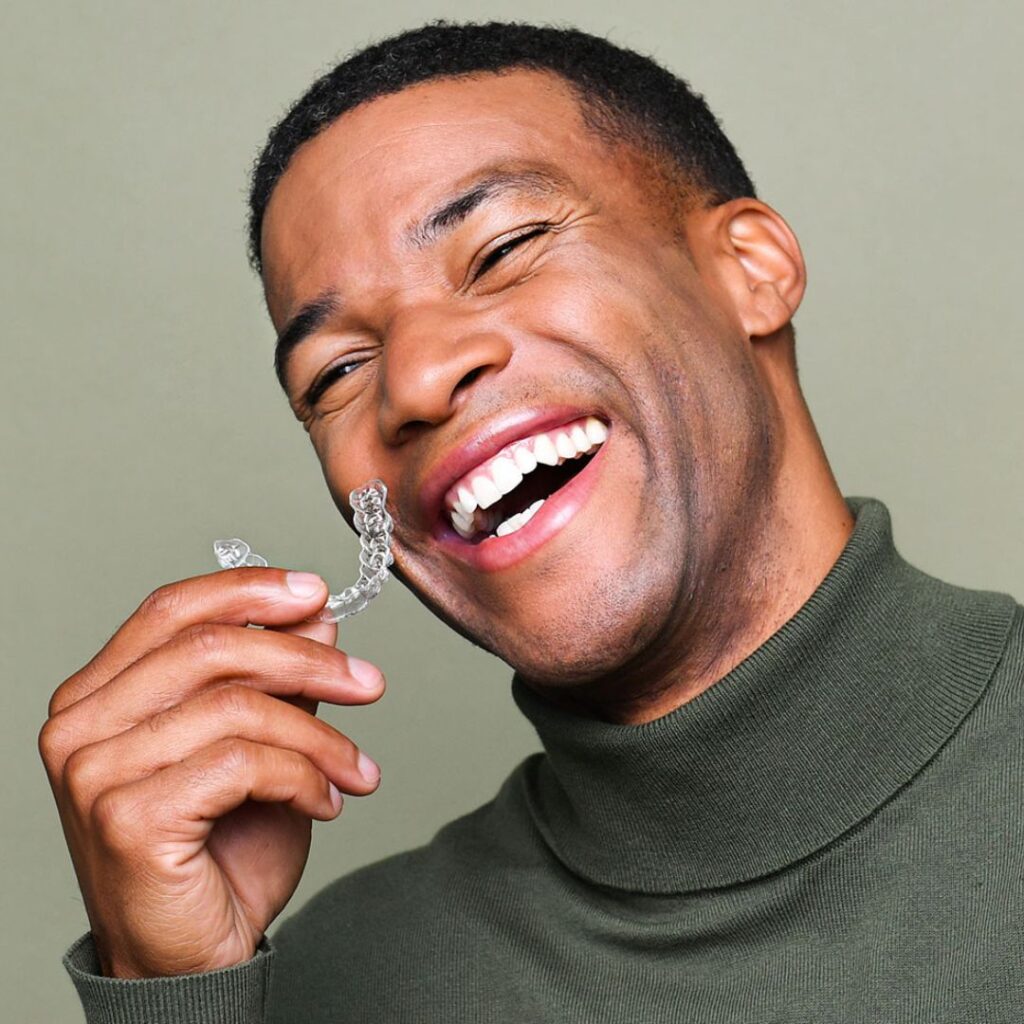
This specific local demand has driven a massive rise in the popularity of ceramic braces and clear aligners. Abuja residents heavily prioritize discreet, modern orthodontic options that allow them to straighten their teeth comfortably without compromising their professional appearance.
Partner Network Data — Abuja
Demographic Shifts in Abuja Orthodontic Patients
Data from our partner network proves that orthodontic treatment is no longer just for teenagers in Abuja.
Source: Partner network data • Abuja orthodontic referral clinics • 2024
Common Mistakes Abuja Patients Make
Relying on Dangerous Mail-Order Aligners: Attempting to straighten teeth using unmonitored plastic trays ordered online can lead to permanent root damage and loose teeth.
Skipping the Crucial Retainer Phase: Assuming teeth will stay in place forever once the braces are removed. Without retainers, teeth will naturally drift back.
Believing Braces Are Only for Children: Delaying treatment due to the misconception that adult teeth cannot be safely shifted into a perfect smile.
The Modern Orthodontic Process
The independent dental experts within the ORA by Abuja Dental network follow a precise, data-backed protocol to design your smile:
3D Digital Smile Mapping: High-resolution intraoral scanners capture a complete 3D model of your mouth, replacing uncomfortable traditional impressions.
Custom Biomechanical Planning: Your specialist maps out the exact movement of each tooth, giving you a digital preview of your final smile.
Precision Appliance Fitting: Careful placement of custom ceramic brackets, traditional metal braces, or the delivery of your clear aligners.
Routine Monitoring & Calibration: Quick check-ups every 4 to 8 weeks to track your alignment progress and adjust the treatment forces gently.
Retention Preservation: Creating a durable, hidden retainer to ensure your new smile stays perfectly in place for life.
Industry Data — Appliance Comparison
Average Treatment Timelines by Appliance Type
Choosing the right treatment method heavily impacts your overall time spent in braces. Ranges reflect mild to complex cases.
Source: AAO treatment duration studies • Ranges vary by case complexity and patient compliance
Case Study: Aligning a Professional’s Smile Discretely
The Challenge: A 31-year-old corporate consultant from Maitama presented with severe crowding in her front teeth, which made her highly self-conscious during executive presentations.
The Diagnosis: Severe anterior crowding and a minor bite misalignment that was causing uneven wear on her enamel.
The Solution: Our partner specialists initiated a 14-month custom clear aligner treatment program.
The Result: Complete alignment achieved within the predicted timeline without the use of metallic wires, giving the patient a massive boost in professional confidence.
Data Comparison: Comparing Your Options
| Traditional Metal Braces | Ceramic (Clear) Braces | Premium Clear Aligners |
Visibility: High (Silver brackets and wires) | Visibility: Low (Blends with natural tooth color) | Visibility: Virtually Invisible (Clear plastic trays) |
Removability: None (Fixed permanently during care) | Removability: None (Fixed permanently during care) | Removability: High (Removable for eating and brushing) |
Dietary Restrictions: High (Avoid sticky, hard, or crunchy foods) | Dietary Restrictions: High (Avoid hard foods; can stain easily) | Dietary Restrictions: None (Remove trays before eating) |
Average Treatment Time: 18 to 24 Months | Average Treatment Time: 18 to 24 Months | Average Treatment Time: 12 to 18 Months |
Orthodontic Science
How Teeth Safely Move Into Alignment
Understanding the biological process behind safe, permanent orthodontic alignment — from first pressure to final position.
Appliance Applied
Brackets and archwire are bonded to teeth, delivering continuous, calibrated force.
Ligament Response
The periodontal ligament stretches on one side and compresses on the other, signalling bone cells to act.
Bone Remodelling
Osteoclasts dissolve bone ahead of the tooth. Osteoblasts build new bone behind it, enabling safe movement.
New Position Set
The tooth settles in its ideal position. New bone solidifies and a retainer preserves the final alignment.
Key Takeaways
Orthodontic care corrects structural bite issues that directly cause long-term tooth decay and jaw joint pain.
Adults make up a massive percentage of modern orthodontic patients thanks to highly discreet cosmetic options.
Wearing a custom retainer after your active treatment is essential to keep your straight smile from shifting back.
Sources & Methodology
This guide is built upon aggregated clinical statistics from our local Abuja partner practices, regional patient behavior data across the FCT, and treatment protocols established by the World Federation of Orthodontists (WFO).
Frequently Asked Questions
The overall cost depends on the complexity of your misalignment and the specific type of braces you choose. Clear aligners and cosmetic ceramic brackets generally cost more due to the advanced technology and materials used.
While all orthodontists are dentists, an orthodontist has completed several years of additional, specialized university training focusing exclusively on safely moving teeth and aligning jaws.
You will feel some mild soreness and pressure for a few days after your braces are first put on or adjusted. This is a normal, healthy sign that your teeth are successfully moving into their correct positions.
Most orthodontic treatments last between 12 and 24 months. The exact duration depends heavily on how far your teeth need to move and how strictly you follow your care guidelines.
Clear aligners are excellent for mild-to-moderate crowding. However, very complex structural jaw alignment issues may still require the specialized structural support of traditional braces.
Most patients visit their dental clinic in Abuja once every 4 to 6 weeks for quick progress checks and wire adjustments.